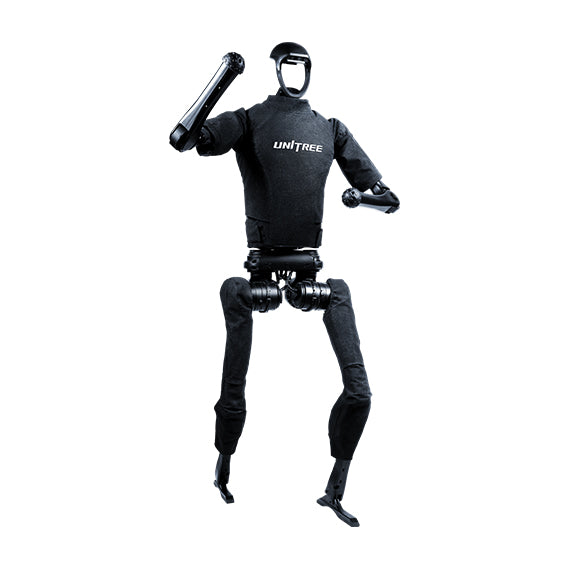
Original H1, not H1-2
Unitree lists original H1 and H1-2 separately. Original H1 has an 864 Wh battery, 3D LiDAR and a depth camera; a dexterous hand is optional. The later H1-2 has a different arm design, weight and load specification, so choosing an H1 starts with identifying the precise version and accessories.1
Optional hands make a practical difference. A demonstration of picking up an object needs to be understood alongside the hands and control software used. Unitree’s H1 table leaves the arm-load rating unspecified, and the battery’s energy capacity does not tell an owner how long a particular task will run.1
Movement and the development package
Unitree’s product page lists a moving speed of 3.3 m/s and describes more than 5 m/s as potential mobility. Its company timeline separately reports an H1 running demonstration above 10 m/s on April 11, 2026. That later achievement is a dated company demonstration with unspecified hardware and test conditions, distinct from the product-table rating.12Reported
The development package matters as much as the headline movement. Unitree lists Core i5 computing for platform functions and Core i7 computing for user development, with other choices dependent on configuration. A research team should establish which hardware, firmware and software access the quotation includes, and which behaviours it will need to develop itself.1
Planning an H1 project
Unitree reported H1 volume production in its August 2024 World Robot Conference account, which described 19 degrees of freedom. That is a useful production milestone for the original platform. A buyer still needs a current original-H1 quotation covering price, delivery destination and lead time.31Reported
An H1 project needs people and space assigned to it. Ask the supplier to define the operating area, training, emergency procedures, maintenance and recovery after a fall. Confirm what parts and software support are available locally, and how cameras and remote access will be managed. Unitree itself advises buyers to understand humanoid limitations and possible differences in delivered parameters.1
If the goal is less household work, begin with one task, such as carrying laundry or putting away groceries. Ask to see it completed on the offered configuration, including the help it needs when something goes wrong. Have the supplier distinguish supplied skills from behaviours your team would need to develop, with the required hardware and software written into the quote.1