LimX Dynamics
The Shenzhen company develops humanoids and research robots, with Oli for development and Luna for interaction and performance.15
LimX Dynamics works on a problem that becomes obvious the moment a robot leaves a flat floor: moving its body while understanding what is around it. The company has progressed from wheeled and bipedal research machines to humanoids such as Oli. For a family following that progress, its range is easiest to understand by the intended job. A platform for researchers and a robot for public interaction are different starting points.135
Visit LimX Dynamics ↗From movement research to a product range
LimX dates its founding to January 2022 in Shenzhen. A November 2023 announcement identifies Dr. Wei Zhang as founder and welcomes Li Zhang as co-founder and chief operating officer. Li Zhang brought experience in autonomous driving and Cisco China. The same announcement names robotics researcher Dr. Jia Pan as chief scientist, bringing another link between academic research and product development.12
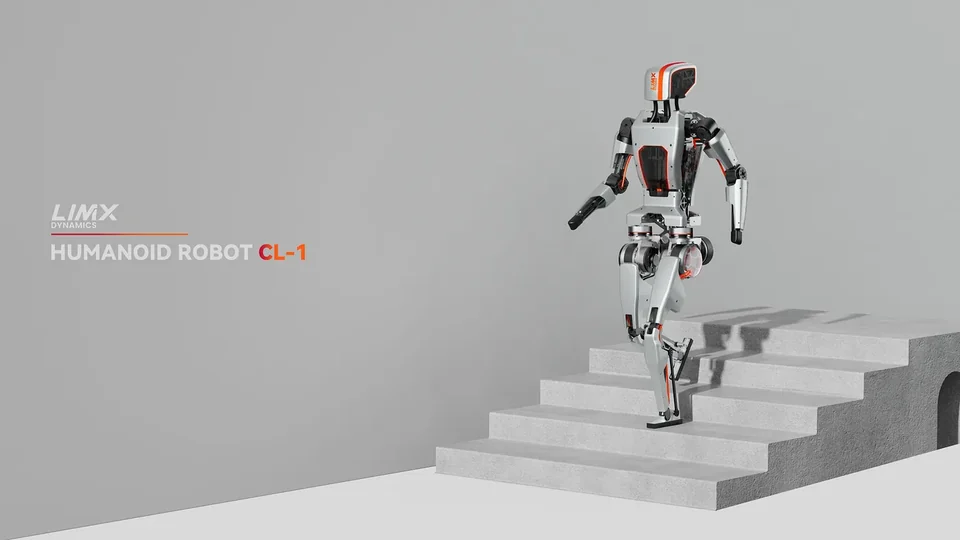
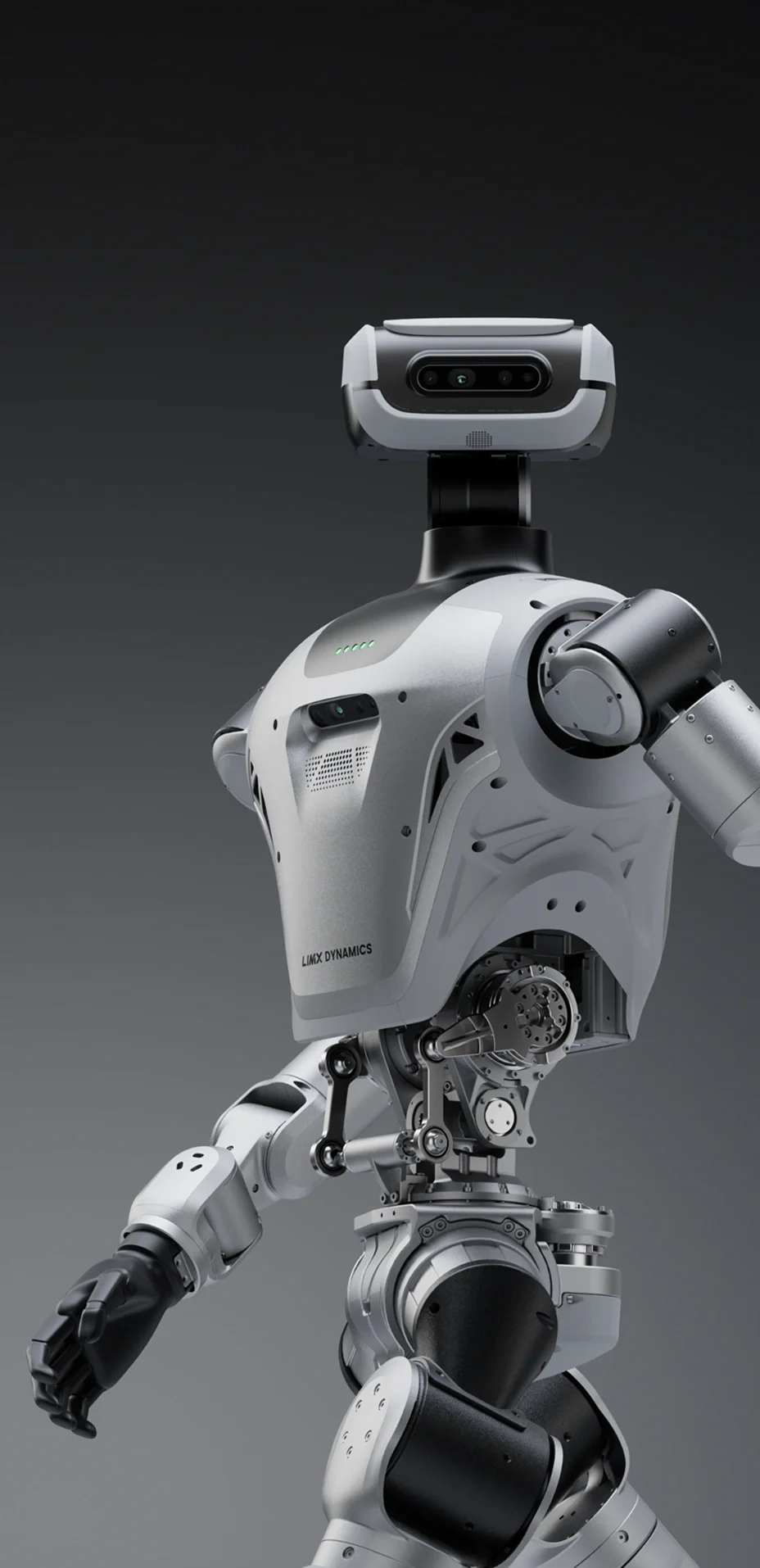
The early machines show that focus on movement. LimX introduced the wheeled quadruped W1 in 2023, showed its biped P1 later that year and published CL-1 humanoid tests in December. Its description of CL-1 explains the connection: P1 helped develop motion control before the work expanded into a full-size humanoid body.13
CL-1 belongs to that early research history. Oli is a later platform, launched on July 30, 2025 for development and algorithm validation. Keeping the names separate makes the progression from motion experiments to an offered research platform easier to follow.345
Software alongside the robot body
LimX’s timeline records the introduction of its COSA humanoid brain system in January 2026, a COSA 0.5 milestone in July and the open-source release of FluxVLA Engine in April. Those entries show a growing software effort alongside the hardware. Ask which version and functions are included with the robot being offered.1
Choose the job before the robot
LimX's current FAQ provides a helpful division of labour. Oli is for development and algorithm validation. Luna is intended for commercial performance and interaction. TRON 1 targets research into learned movement, while TRON 2 emphasises dual-arm manipulation and development of models that connect vision, language and action. These are related products, not interchangeable editions of the same humanoid.5
Oli
Oli is a platform for researchers and developers to build and validate robot behaviour. Its July 2025 launch described Lite, EDU and Super editions for Mainland China at that time. A present enquiry needs to establish the available edition and destination, rather than assume the launch offer applies everywhere.45
Luna
Luna is intended for commercial performance and interaction. An event or public venue should begin with the interaction it needs to present and ask which preparation and support are included in the proposed package.5
TRON 1 and TRON 2
TRON 1 serves reinforcement-learning research into movement. TRON 2 focuses on dual-arm manipulation and models connecting vision, language and action. Choose between them by the experiment or task, with the hardware and development tools specified in the quote.5
What to watch next
For a school or demonstration venue, the first question might be whether the goal is to develop behaviour or present an interaction that already works. That choice changes the skills, preparation and support to request. For a family seeking help at home, it changes the question again: which task is the supplier actually prepared to deliver and support in that setting?5
LimX describes homes as a future destination for its technology. The most useful progress to follow is a complete job becoming repeatable: approaching an object, handling it, moving it and recovering when the surroundings change. Buyers of today's platforms should meanwhile get a configuration-specific quote and a demonstration of the work they intend to do. LimX's sales process explicitly leaves pricing and delivery timing to that discussion.15
Read more on Robots in the House
Sources and notes
- LimX company history
Company history dates LimX’s Shenzhen origin to January 2022 and records the W1, P1, CL-1 and software milestones. Future home applications are an ambition. Source checked 2026-10-26.
- LimX founder and appointments
November 2023 company announcement identifies founder Wei Zhang, co-founder and then COO Li Zhang, and chief scientist Jia Pan. Biographies and titles retain their historical scope. Source checked 2026-10-26.
- CL-1 original dynamic tests
CL-1 is identified as a research platform developed from P1. These historical tests do not establish Oli’s configuration or capabilities. Source checked 2026-10-26.
- Oli launch
July 30, 2025 Oli launch describes Lite, EDU and Super and Mainland China availability at that time. It is not a current worldwide offer for every edition. Source checked 2026-10-26.
- LimX current FAQ
The maker’s FAQ assigns different roles to Oli, Luna, TRON 1 and TRON 2. Pricing and delivery timing require a configuration-specific sales quotation. Source checked 2026-10-26.
- LimX angel and Pre-A announcement
October 17, 2023 release says nearly CNY 200 million across angel and Pre-A financing combined. The approximate qualifier is retained. Source checked 2026-10-26.
- LimX news index
Company news index lists a US$200 million Series B on February 2, 2026. The packet used the headline and company history, without a full round report or inferred investor allocation.
- LimX pre-IPO financing
July 14, 2026 company disclosure says nearly US$200 million for the pre-IPO round and US$400 million across the preceding six months. The latter includes financing within that interval and is not a lifetime total. “Pre-IPO” is not a completed listing. Source checked 2026-10-26.
We use official disclosures and other identified sources. Company claims are attributed; these profiles do not represent hands-on product testing. Our editorial and AI-use policy.