What changed across the demonstrations
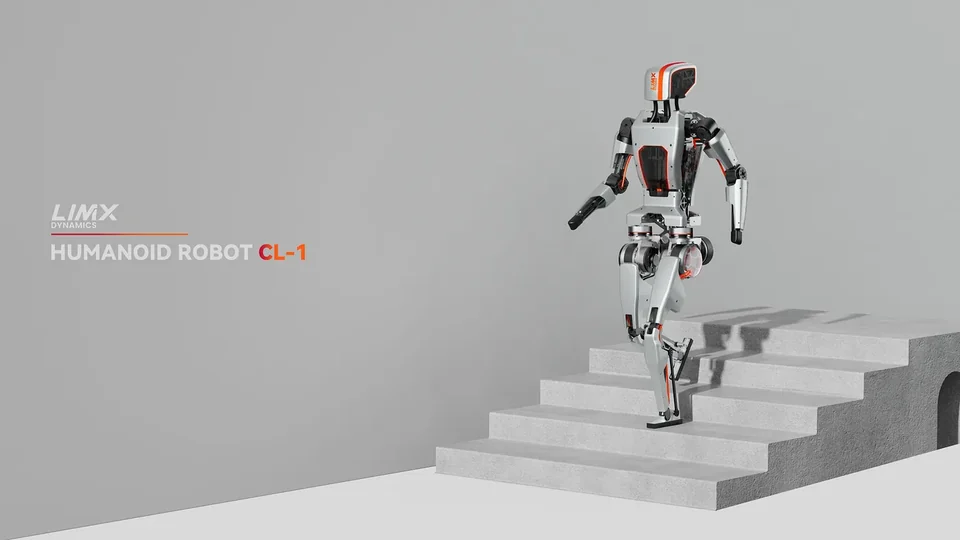
LimX first published CL-1's dynamic tests in December 2023. The company described movement over a curb, up stairs and down a 15-degree slope, with indoor and outdoor trials. It also explained that the full humanoid grew from work on its point-foot biped P1, which had provided a platform for developing movement-control algorithms.2
An April 2024 update showed a changed stair-climbing pattern, alternating feet on successive steps, alongside running from a standing start and coming to a stop. LimX described changes to both control software and hardware. These were successive development tests, so details from one demonstration should not be treated as specifications for every CL-1 ever shown.3
By August 2024, the company was demonstrating loading in a simulated warehouse. Its report identifies 4.1 kg and 8.2 kg objects, shelves at 50 cm and 130 cm, and a 73 cm table. Those details make the exercise understandable: the robot had to coordinate its body and arms across different heights. They are the objects and furniture used in that scene, not a maximum carrying capacity or an installation in a customer's warehouse.4
Why this matters beyond a laboratory
Think about moving a shopping bag from the floor to a kitchen counter. The useful result requires the whole sequence: finding a grip, balancing the load, moving through the room and setting it down. CL-1's demonstrations make parts of that problem visible. They also suggest what to ask of a later product: show the whole job, including what happens when the object or its position changes.24
CL-1 belongs to LimX’s development history. The company’s current families include Oli, Luna and TRON; Oli launched on July 30, 2025 as a separate product. Identify a CL-1 clip by model and demonstration date when comparing that research with later products.15
If a seller offers a machine under the CL-1 name, request its exact revision, documentation, support arrangement and intended operating environment before comparing it with today's platforms. For readers following the research, the better question is whether each new demonstration joins more of the task together, with less help and a clearer explanation of its limits.23