NASA (National Aeronautics and Space Administration)
Government research agency. NASA’s humanoid work explores how robots can help people use tools and equipment in demanding environments.124
- Organization
- Government research agency1
- Operations began
- 1958-10-011
- Robotics research location
- Johnson Space Center, Houston, Texas4
Opening a handle or moving a supply bag may look modest beside a rocket launch. Those movements explain why NASA belongs in a humanoid directory: its research asks how machines can work with equipment designed for people. Robonaut 2 and Valkyrie offer two different views of that problem. NASA appears here as their research organization, with General Motors’ role in Robonaut 2 identified separately.245
Visit NASA (National Aeronautics and Space Administration) ↗A public research mission
NASA is the National Aeronautics and Space Administration, a United States civilian government research and exploration organization. President Dwight D. Eisenhower signed the legislation establishing it on July 29, 1958. Operations began on October 1. Those dates describe separate events, and the agency grew from the earlier National Advisory Committee for Aeronautics.1
At Johnson Space Center in Houston, the work brings robotic hardware and software together around dexterous manipulation for human spaceflight. Robonaut 2 and Valkyrie help separate two questions: how a robot uses its hands, and how a whole body reaches the job. That distinction is useful when comparing humanoids that look similar in a short clip.245
A shared development effort
NASA and General Motors developed Robonaut 2 under a cooperative agreement. The distinction matters when reading a maker name: NASA’s research role and GM’s collaboration are both part of this robot’s history. The directory’s NASA link does not imply that the agency built it alone or endorses other products on this site.2
The two NASA robots in this directory
These are the two NASA research robots listed in this directory. Their individual records carry the detailed development history; the agency profile explains the institutional connection.25
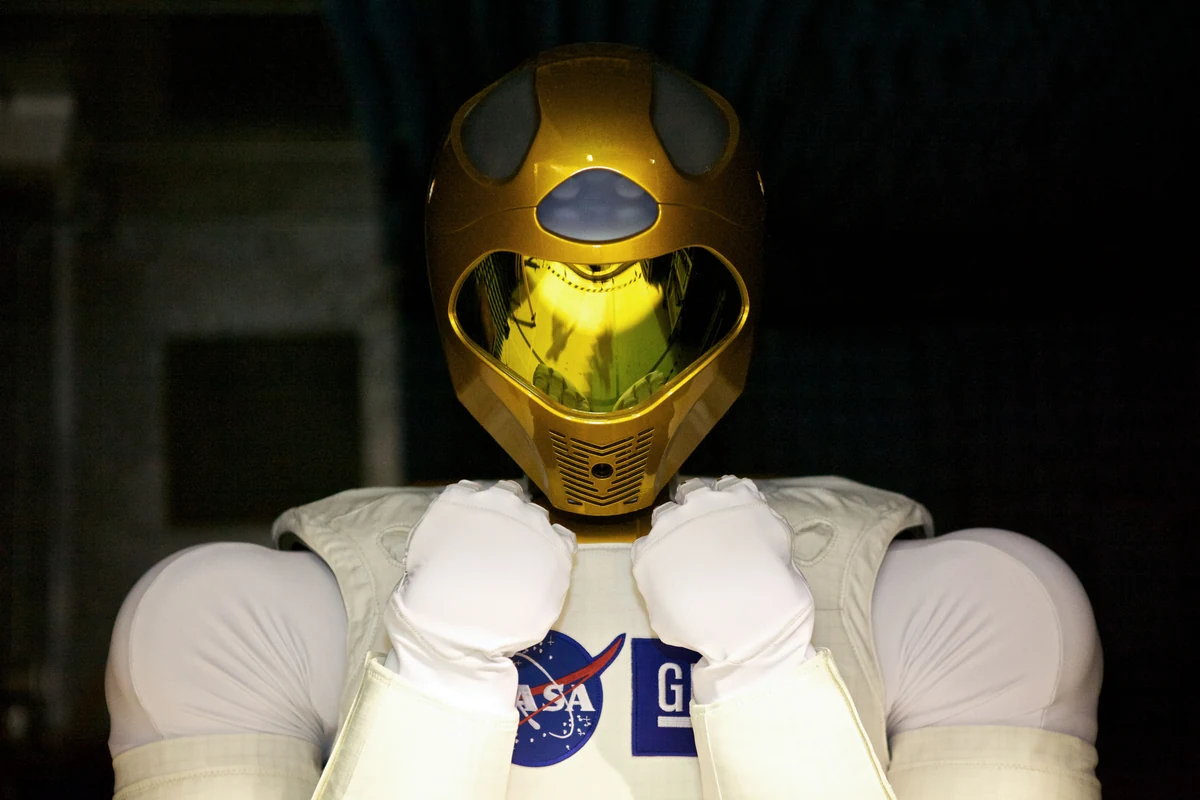
Robonaut 2
Robonaut 2 focused on using hands and arms with tools and equipment designed for people. Its original configuration had a head, arms and torso on a fixed support. It launched to the International Space Station on February 24, 2011. NASA’s retrospective records a station stay ending in 2018 and says the hoped-for spacewalking-avatar objective was not achieved.234
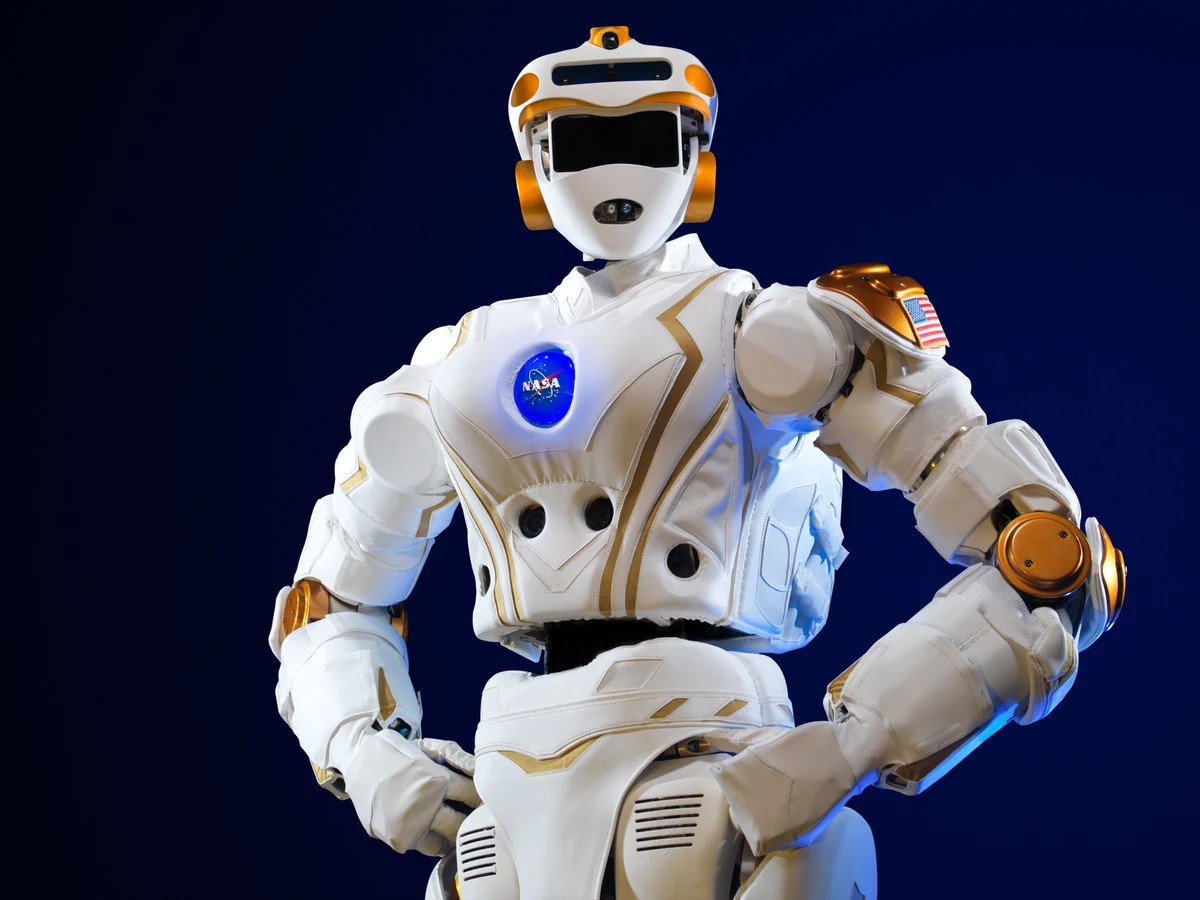
Valkyrie
Valkyrie, also called R5, was built by Johnson Space Center’s Engineering Directorate for the 2013 DARPA Robotics Challenge Trials. This electric biped addressed damaged human environments. NASA’s September 2015 technical profile documents that historical platform and subsequent hands, ankles and perception upgrades. Its development history shows why a robot’s configuration and the date of a technical description matter when reading a demonstration.5
What the research means for a household reader
The examined NASA sources describe research programs and do not establish a household purchase offer. This is the editorial scope of these records, not a claim about every possible technology transfer. Humanoid research also does not establish child safety, unsupervised home operation or a supported domestic ownership package. We have not tested either robot.245
What job are you imagining?
If a demonstration makes you imagine help at home, start with the task: what must the robot recognize, what can it grasp, and who intervenes when it gets stuck? Read the dated configuration and research purpose before comparing either project with a robot offered for a family’s home.45
Read more on Robots in the House
Humanoid robots
Compare the directory’s human-shaped robots and their stated purposes.
Sources and notes
- NASA origins
Legislation on July 29 and operations on October 1, 1958 are separate events. Eisenhower’s legislative role is not a founder-person field. Source checked 2026-10-26.
- Robonaut 2 program
NASA and General Motors collaboration and the February 24, 2011 launch. Launch-era ISS-resident wording is historical; use the later 2011 to 2018 residency record. Source checked 2026-10-26.
- Humanoid Robots Assist Assembly Lines
NASA’s retrospective supplies the 2011 to 2018 ISS interval. No current R2 location or exact return-transport date is inferred. Source checked 2026-10-26.
- Reliable Robots: Johnson's Dexterous Robotics Team
Johnson Space Center is the robotics location, not a sourced NASA headquarters. The retained research describes manipulation for human spaceflight; no new 2026 deployment or performance claim is made. Includes editorial interpretation. Source checked 2026-10-26.
- NASA R5 technical profile
The September 23, 2015 technical profile documents the 2013 origin and historical upgrades. Household terms and safety remain unestablished; historical engineering specifications are not current consumer ratings. Source checked 2026-10-26.
We use official disclosures and other identified sources. Company claims are attributed; these profiles do not represent hands-on product testing. Our editorial and AI-use policy.