Menu

Robonaut 2

NASA (National Aeronautics and Space Administration)Editorial review pending

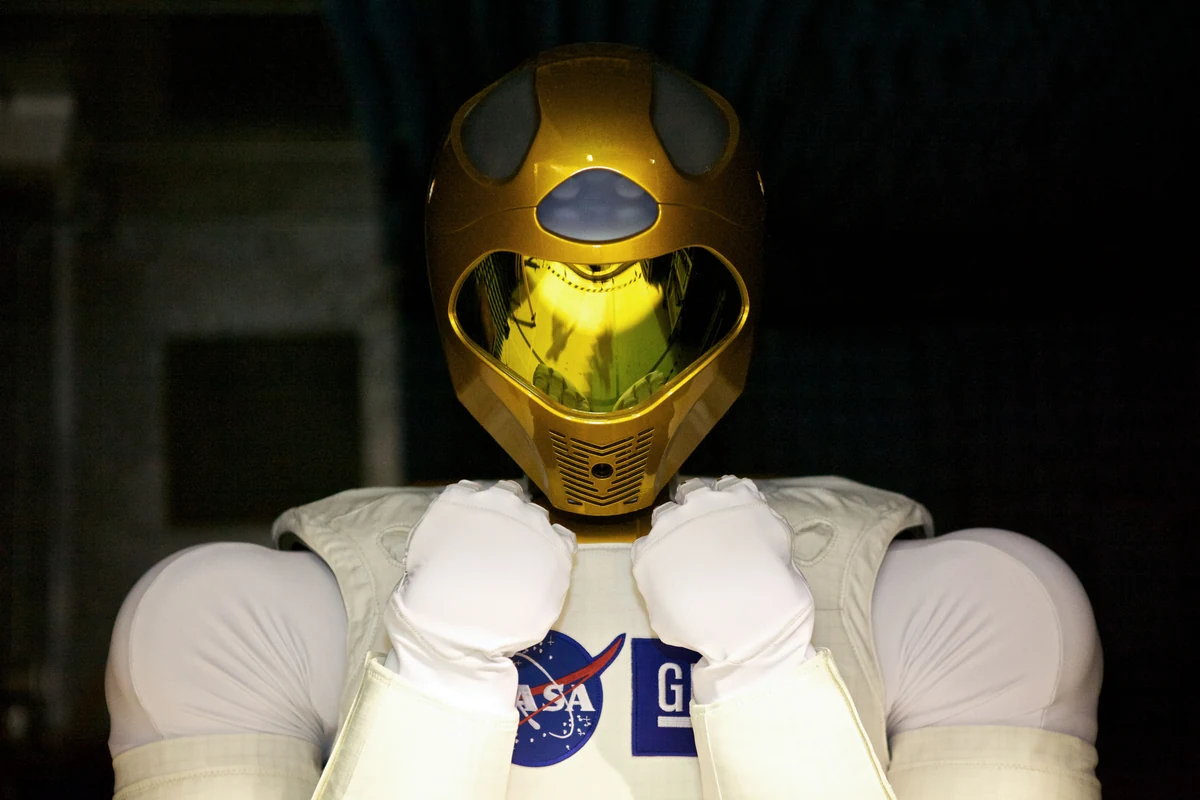
Robonaut 2 during preflight chamber testing, June 2010.

Photo: NASA/Kris Kehe. Robonaut 2, June 2010 preflight upper body, before the 2014 leg upgrade. Image source (opens in a new tab) Photo license (opens in a new tab)

NASA and General Motors' humanoid research platform explored working with equipment designed for people.1

Before you choose

What was Robonaut 2 designed to do?

R2 investigated dexterous work with tools and equipment designed for people. Its space-station research is useful for understanding robot hands and human-robot cooperation, rather than assessing a home assistant.

Source(opens in a new tab)Source(opens in a new tab)

Did R2 walk on two legs?

The original flight assembly had a head, torso and arms on a fixed support. Climbing legs were added in 2014 for mobility inside the space station. That upgrade should not be described as ordinary walking on a floor. Keep the date and configuration with any image or specification.

Source(opens in a new tab)

Is Robonaut 2 still on the space station?

NASA’s retrospective places R2’s station residency in 2011 to 2018. The older mission page’s resident wording is historical. The examined sources do not establish the present location of every R2 unit or a return to orbit.

Source(opens in a new tab)Source(opens in a new tab)

Did NASA or General Motors build R2?

NASA and General Motors collaborated on Robonaut 2 under a 2007 agreement. NASA supplies the spaceflight research context; GM is a co-developer. Naming NASA as the directory’s lead organization does not give it sole development credit.

Source(opens in a new tab)Source(opens in a new tab)

Can a family buy R2 or use it at home?

The examined NASA research materials do not establish a consumer purchase, installation or support package. A demonstration of manipulating one object does not establish the ability to handle a household routine. Treat price, service and domestic suitability as unestablished.

Source(opens in a new tab)

Did R2 become an operational spacewalking robot?

No. NASA’s Spinoff retrospective says the spacewalking-avatar objective was not achieved. Its flight history and manipulation research remain distinct from that unfinished objective, and from newer NASA robotics work.

Source(opens in a new tab)Source(opens in a new tab)

The robot and the research

Robonaut 2 is most interesting when you look at its hands. The NASA and General Motors project was designed to investigate tasks people perform with tools and equipment, including work in space. Known as R2, it reached the International Space Station in 2011. It is a research platform with a flight history, not a household robot with an order page.1Inferred

How R2 reached the station

Work on the original Robonaut began in 1997. A 2007 agreement brought NASA and General Motors together on the next generation. R2 launched aboard Discovery on February 24, 2011, as part of mission STS-133. That chronology matters: Robonaut is the broader project, while Robonaut 2 identifies the later hardware covered here.1

R2 first operated as a head, torso and arms on a fixed support. A mobility upgrade added climbing legs in 2014 for moving around inside the station. Those are different configurations, so a photograph of the torso-only machine should not be mistaken for the later complete assembly.1

What the experiment taught

NASA's retrospective places R2 aboard the station from 2011 to 2018. It also explains that the hoped-for role of a robot working outside the station under an astronaut's control was not achieved. That is a specific unfinished objective, not a reason to erase the manipulation research or describe the project as an operational spacewalking service.21

Robonaut's legacy remains part of NASA's current work. In September 2026, Johnson's Dexterous Robotics Team described how experience from R2 and Valkyrie informs its research. R2's completed station residency should therefore be understood as part of a continuing engineering history, rather than evidence that the robot is still in orbit.32

Reading a demonstration

For a family watching R2 handle an object, the useful questions are concrete: was the object placed for the robot, who selected the next action, and what happened when the grasp failed? A hand performing one operation is an important piece of robotics, but it does not answer how a machine would cope with a cluttered room or unfamiliar belongings.1

NASA presents R2 as a research platform, without an established household purchase or ownership package. Treat it as a way to understand dexterity and human-robot cooperation. Valkyrie offers a related view of whole-body research. NASA’s government research role differs from the role of a consumer robot supplier.134Inferred

NASA’s role

NASA is a United States civilian government research and exploration organization. Its dexterous-robotics work investigates manipulation for human spaceflight. That context describes these research programs; it does not establish a household sale or make NASA a privately owned or publicly traded robot company.43

Explore further

Sources and notes

  1. 1. Robonaut 2 program

    NASA’s program page documents the NASA and General Motors collaboration, the flight mission and the later climbing-leg upgrade. The original torso assembly and legged upgrade are separate configurations. Use the 2011 to 2018 residency from NASA’s later retrospective; launch-era resident wording is not a current location report. Evidence dates and retrieval limits are retained from the cited research. This profile reports source accounts rather than our own hardware testing.Inferred

    Evidence checked: 2026-10-26

  2. 2. Humanoid Robots Assist Assembly Lines

    NASA’s 2026 Spinoff retrospective places R2 aboard the station from 2011 to 2018 and says the spacewalking-avatar objective was not achieved. Evidence dates and retrieval limits are retained from the cited research. This profile reports source accounts rather than our own hardware testing.

    Evidence checked: 2026-10-26

  3. 3. Reliable Robots: Johnson's Dexterous Robotics Team

    NASA’s September 2026 team feature describes dexterous-robotics research and includes Valkyrie. It does not establish that R2 returned to orbit or that either robot is a household product. Evidence dates and retrieval limits are retained from the cited research. This profile reports source accounts rather than our own hardware testing.

    Evidence checked: 2026-10-26

  4. 4. NASA origins

    NASA’s historical account separates the July 29, 1958 legislation from the October 1 start of operations and describes its civilian government origins. Evidence dates and retrieval limits are retained from the cited research. This profile reports source accounts rather than our own hardware testing.

    Evidence checked: 2026-10-26

What does degrees of freedom mean?