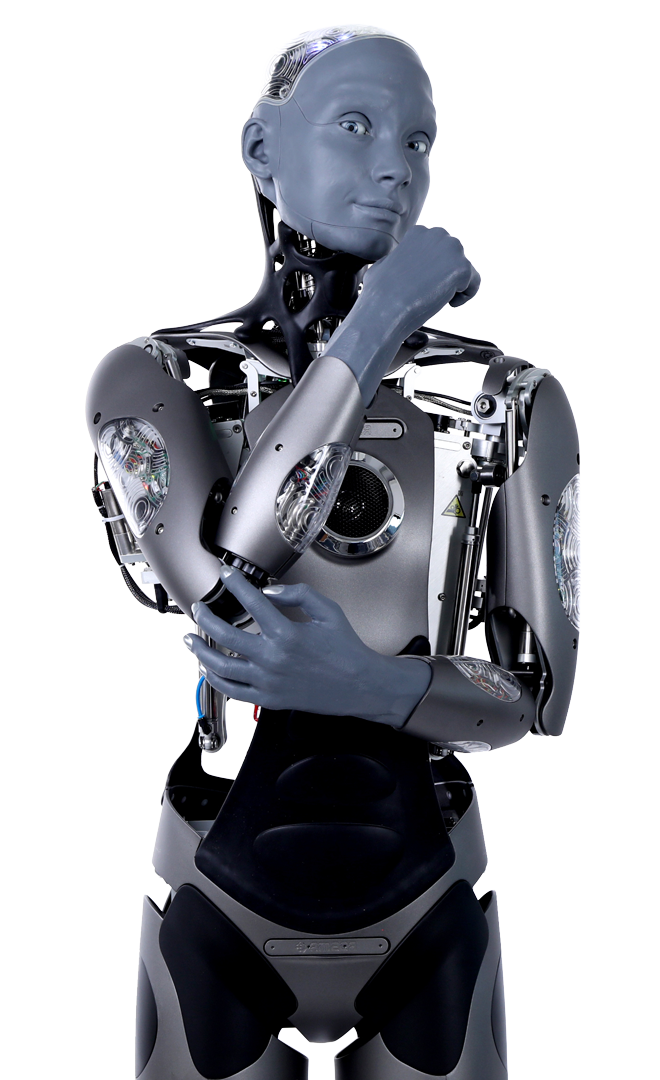
The full-size model
Engineered Arts identifies the full-size model as Generation 2.6 (2024), within the Ameca family introduced in 2021. It lists a height of 1,870 mm, a weight of 62 kg and 61 actuated movements. Of those, 27 animate facial features. Ameca Desktop Generation 3 is a separate configuration with its own hardware and software features.125
The full-size robot is an installed interaction platform. Its listed movements belong to the face, neck, shoulders, arms, hands and torso. Cameras, microphones and a speaker support the encounter, while the fixed installation needs space, mains power and a plan for how people will approach it.21
Software, control and visitor data
Tritium connects the physical robot to browser-based controls, cloud AI services and its operating system. Engineered Arts offers Interaction, Conference and Telepresence modes. These create different kinds of encounter, so a demonstration should identify the mode and the role of a remote operator as well as showing the voice and expressions.3
For an installation that will meet visitors, the software agreement matters alongside the hardware. Ask which AI services are included, how usage is charged and what remains available without a network connection. Visitor audio, video and transcripts need their own full-size Ameca retention and access terms; the desktop model’s policy is a separate matter.35
Space and ownership
The 600 mm base is only one part of the space calculation. Engineered Arts specifies a primary safety zone at least 3.2 m in diameter, two mains outlets and indoor operation between 10°C and 30°C. The full-size specification lists Ethernet, with Wi-Fi described as coming soon. Have the supplier confirm the layout and connectivity for the machine being quoted.1
Engineered Arts offers demonstrations, quotations and rental enquiries, rather than a standardized public purchase price. Its specification lists a one-year parts-and-labour warranty, extended options and maintenance recommended every six months. The quotation should explain local service coverage, exclusions and software charges so the cost of keeping an installation running is clear.31
Choose the encounter
Imagine the encounter before choosing the robot. A museum may need a short explanation that works amid crowd noise; a researcher may need repeatable control of a particular expression. Ask to see that situation with the expected visitor distance and question length, then establish who can intervene if an answer is unsuitable or the robot stops.231
Ameca is interesting because communication involves more than words. Its face and gestures give researchers and exhibit designers another way to shape an interaction. For a family encountering one, that is the distinction to keep in mind: engaging conversation and practical help with chores are different jobs.25