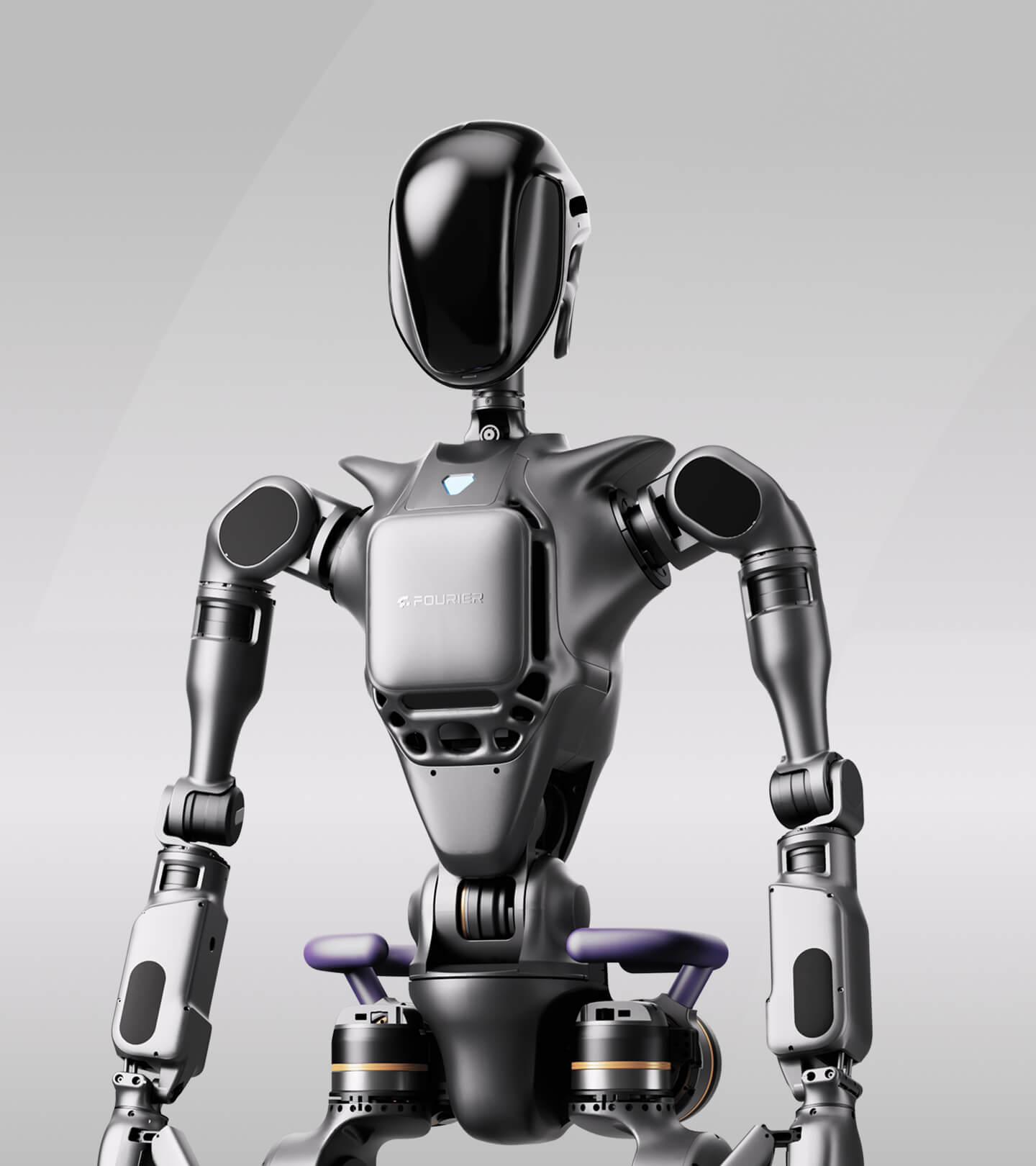
A platform for developing a task
GR-1 is the starting point of Fourier’s humanoid line. The company still lists it alongside the second-generation GR-2 and the GR-3 series. Its role is useful to understand before comparing prices: GR-1 provides a robot body and control interfaces for development, with the application still needing to be built and evaluated.12
For a university team, a useful brief might be teaching a robot to reach for a known object on a bench. That brief sets the questions: which hand is fitted, what software controls it, how much space is needed and who helps when an attempt fails? A broad description of a general-purpose robot does not answer those project questions.2
What the documented configuration provides
Fourier’s legacy manual lists a height of 1,650 mm, an approximate net mass of 52 kg and an approximate single-hand load of 3 kg. It describes six-degree-of-freedom hands and an Ubuntu/ROS 2 computer. Treat these as specifications of the documented configuration and ask for a matching build sheet when evaluating a unit.2
The manual gives alternative actuator counts and inconsistent battery-capacity entries. Those details need clarification for the actual robot. A laboratory planning a session should request measured operating time for its own movement and manipulation routine, including the time needed to recharge or change batteries.2
Setting up and keeping it working
The preparation guide requires checks of the robot and its surroundings, then a specified calibration posture before the emergency stop is released. That makes trained setup part of the project. Use the complete matching manual with the supplier; this profile is not a startup procedure.3
Fourier provides a contact route, but the checked pages do not establish a current GR-1 price, delivery commitment or support package. Before committing, agree the exact hardware, software access, spares and repair arrangements. Where cameras or remote support are involved, ask what data leaves the robot and who can access it.12