Fourier
A robotics company with roots in rehabilitation, now developing humanoids, wheeled robots and tools for robot learning.17
- Founded
- 20151
- Registered location
- Shanghai, China4
- Founder
- Alex Gu1
- Runyang investment, paid by August 2025
- CNY 300m5
Fourier’s story starts with helping people move. Its rehabilitation equipment came before the GR humanoids, and that history gives the company a distinctive place in robotics. Today its catalogue spans machines designed around therapy, platforms for developers and robots intended to interact with people. Understanding those different jobs is the best way to understand the business.127
Visit Fourier ↗A company built around movement
Alex Gu founded Fourier in 2015, starting a business that developed around human movement. An upper-limb rehabilitation robot followed in 2016, then the X1 lower-limb exoskeleton in 2017. The company’s Shanghai roots were followed by its first international office in Singapore in 2018 and a humanoid project in 2019.14
The earlier name, Fourier Intelligence, appears in its January 2022 financing announcement. At that time, the company named Alex Gu as founder and group CEO and Zen Koh as co-founder and group deputy CEO. That history connects the people behind its rehabilitation business with the company now known as Fourier.16
RehabHub arrived in 2020 as an integrated rehabilitation platform. Fourier’s company profile now reports a reach of more than 2,000 institutions across 60 countries. That figure describes the wider business, not the number of GR humanoids in service. For a reader interested in care, its experience with institutions is relevant background, while the suitability of a particular robot still depends on that product’s intended use.1
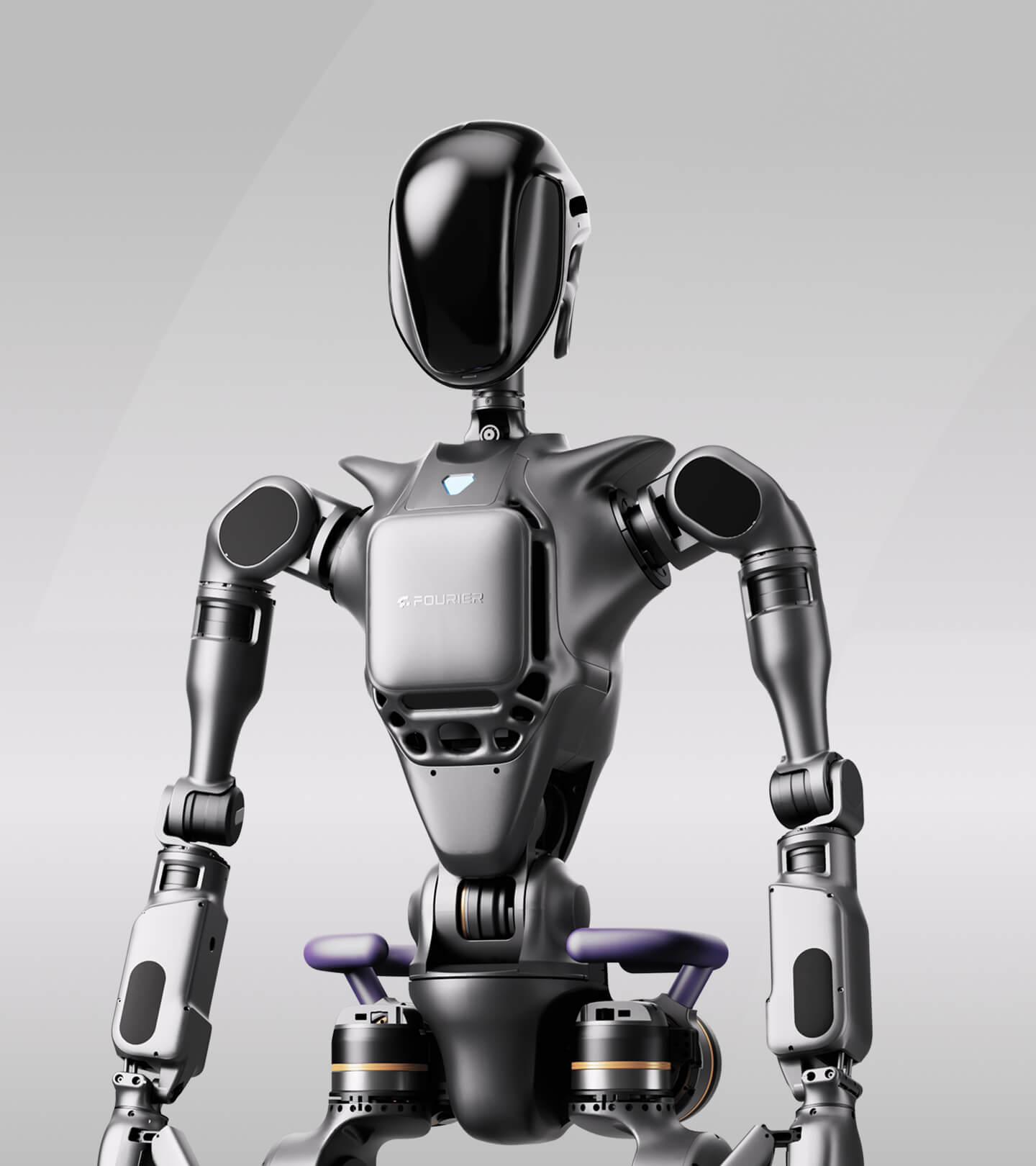
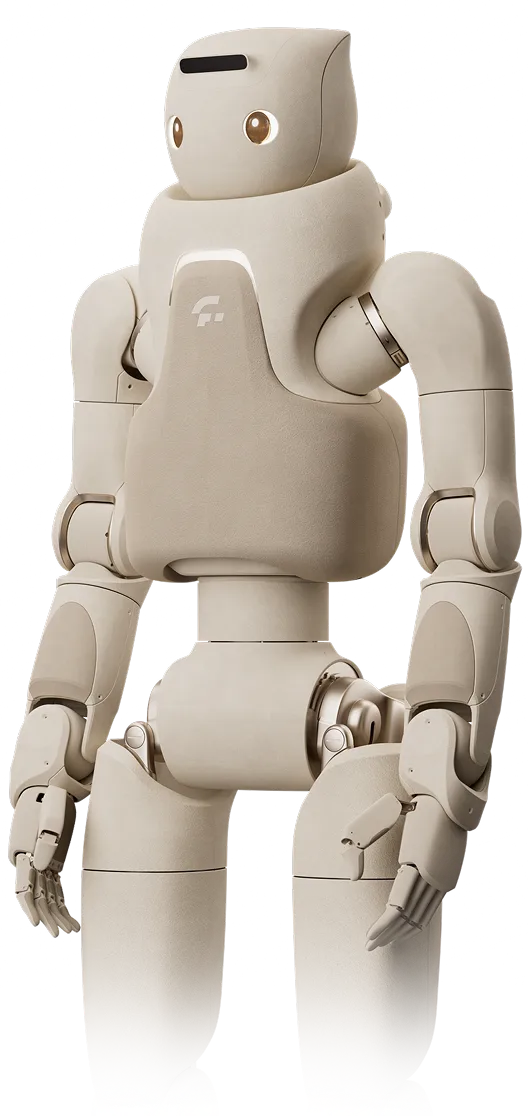
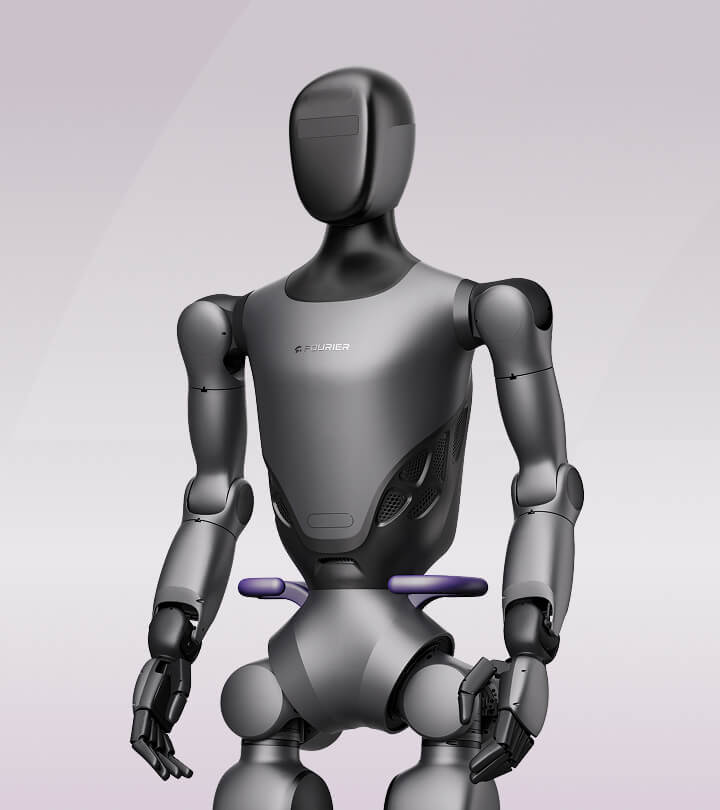
The humanoid programme developed through GR-1, publicly launched in 2023, and GR-2 in 2024. Fourier added GR-3 and the N1 open-source robot in 2025. Its current family page keeps all three GR generations distinct: GR-2 is the second-generation development platform, while GR-3 and GR-3C have their own interaction and application focus.123
In 2026, Fourier’s timeline highlights brain-computer-interface technology in RehabHub and the NEAL Database Initiative. Both strands continue its work on how people and robots move and learn. The rehabilitation products and humanoid platforms remain separate choices, with different uses and requirements.17
The products serve different people
Fourier’s range extends from rehabilitation equipment to bipedal and wheeled robot platforms. An engineering team developing new behaviours and a rehabilitation service planning therapy have different reasons to explore it.7
Fourier GR-2
The second-generation GR platform supports research and experimental work on movement and manipulation. Start with its developer documentation and ask Fourier for the configuration and current supply terms.123
GRW and MetaMotus Galileo
GRW is the wheeled bi-arm robot in the wider range, which also includes MetaMotus Galileo and open-source solutions. These sit alongside the GR bipedal family.7
Where to start
Choose the task before choosing the generation. A laboratory evaluating manipulation should begin with the GR-2 hardware and developer documentation. Someone exploring social interaction should read the separate GR-3 material. A rehabilitation purchase should start with the dedicated rehabilitation product and the clinical team’s requirements. That approach makes Fourier’s range easier to navigate without assuming that every robot carries the capabilities of every other one.127
Read more on Robots in the House
Sources and notes
- Fourier current company profile
Fourier’s company history follows Alex Gu’s 2015 founding, early rehabilitation equipment, the Singapore office, RehabHub and successive GR generations. Its reported institutional reach describes the wider business. Source checked 2026-10-25.
- Fourier GRx series page
The GRx family page distinguishes GR-2, the second-generation platform, from GR-3 and GR-3C. The later models have separate interaction and application roles. Source checked 2026-10-25.
- Fourier GR-2 developer introduction
Fourier’s GR-2 developer manual describes a research platform and its experimental applications. Its hardware descriptions apply to GR-2, with configuration-specific hand options. Source checked 2026-10-25.
- Runyang E3 investment announcement 2025-052
Runyang’s June 27, 2025 disclosure identifies the Shanghai company and an E3 investment agreement: RMB300 million at an RMB8 billion pre-money valuation, with a concurrent employee-share allocation. The projected 3.5060% stake is a transaction term, not a current ownership statement. Source checked 2026-10-25.
- Runyang 2025 annual report
Runyang’s 2025 annual report, published in March 2026, confirms on printed pages 73 and 198 that its investment was fully paid by the August 1, 2025 disclosure. The report’s own operating accounts describe Runyang. They do not establish Fourier’s current revenue, profit, total funding or valuation. Source checked 2026-10-25.
- Fourier Series D announcement
Fourier Intelligence announced a RMB400 million Series D on January 27, 2022, led by SoftBank Vision Fund 2 with Saudi Aramco P7 and Yuanjing Vision Plus participating. Alex Gu’s and Zen Koh’s executive titles in that release are historical. Source checked 2026-10-25.
- Fourier current homepage
Fourier’s current catalogue spans bipedal humanoids, the GRW wheeled bi-arm robot, rehabilitation products and robot-learning tools. Each family serves a different application. Source checked 2026-10-25.
We use official disclosures and other identified sources. Company claims are attributed; these profiles do not represent hands-on product testing. Our editorial and AI-use policy.